Diana
Diana screens Type 2 diabetes risk using routine blood tests, intentionally excluding glucose tests to catch vulnerability before clinical onset.
Turns standard lab panels into actionable risk scores patients can track across regular checkups.
- 01Built the Go backend and Python prediction service with secure logins and role-based permissions for patients, doctors, and admins.
- 02Trained risk models on 1,376 patient records with diagnostic sugar tests held out so predictions remain genuine early warnings.
- 03Tested models across different survey years to make sure predictions hold up on new patients, reaching 74.8% sensitivity.
- 04Grouped at-risk profiles into four distinct metabolic patterns to help clinicians personalize lifestyle recommendations.
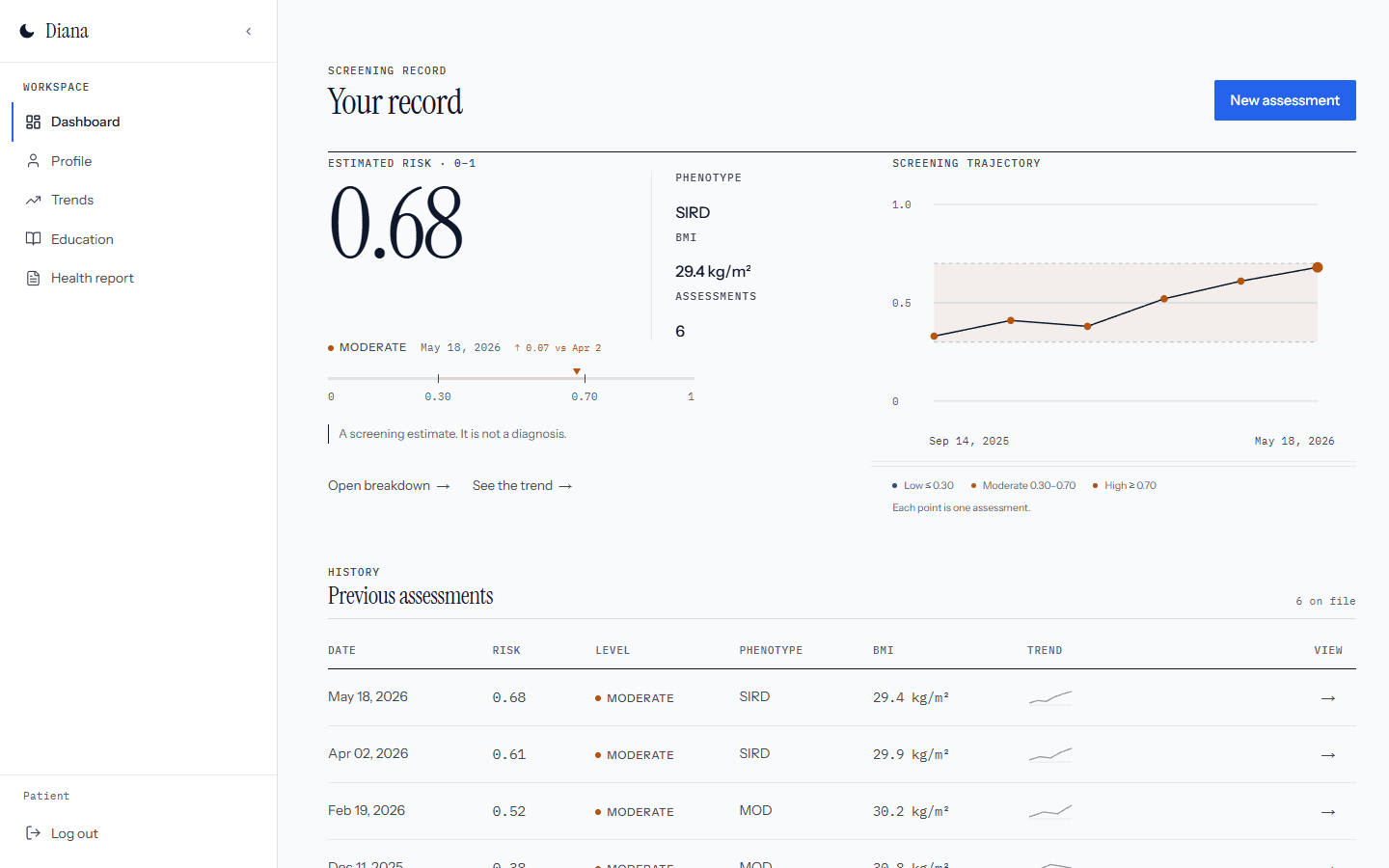
- 05Built the patient portal with risk trends over time, lab snapshots, and printable summary reports.
- 06Created admin screens for account management and audit tracking, plus a doctor intake form tailored to the screening model.
- 07Added clear visual factor charts to explain exactly which blood markers raised or lowered a patient's risk score.
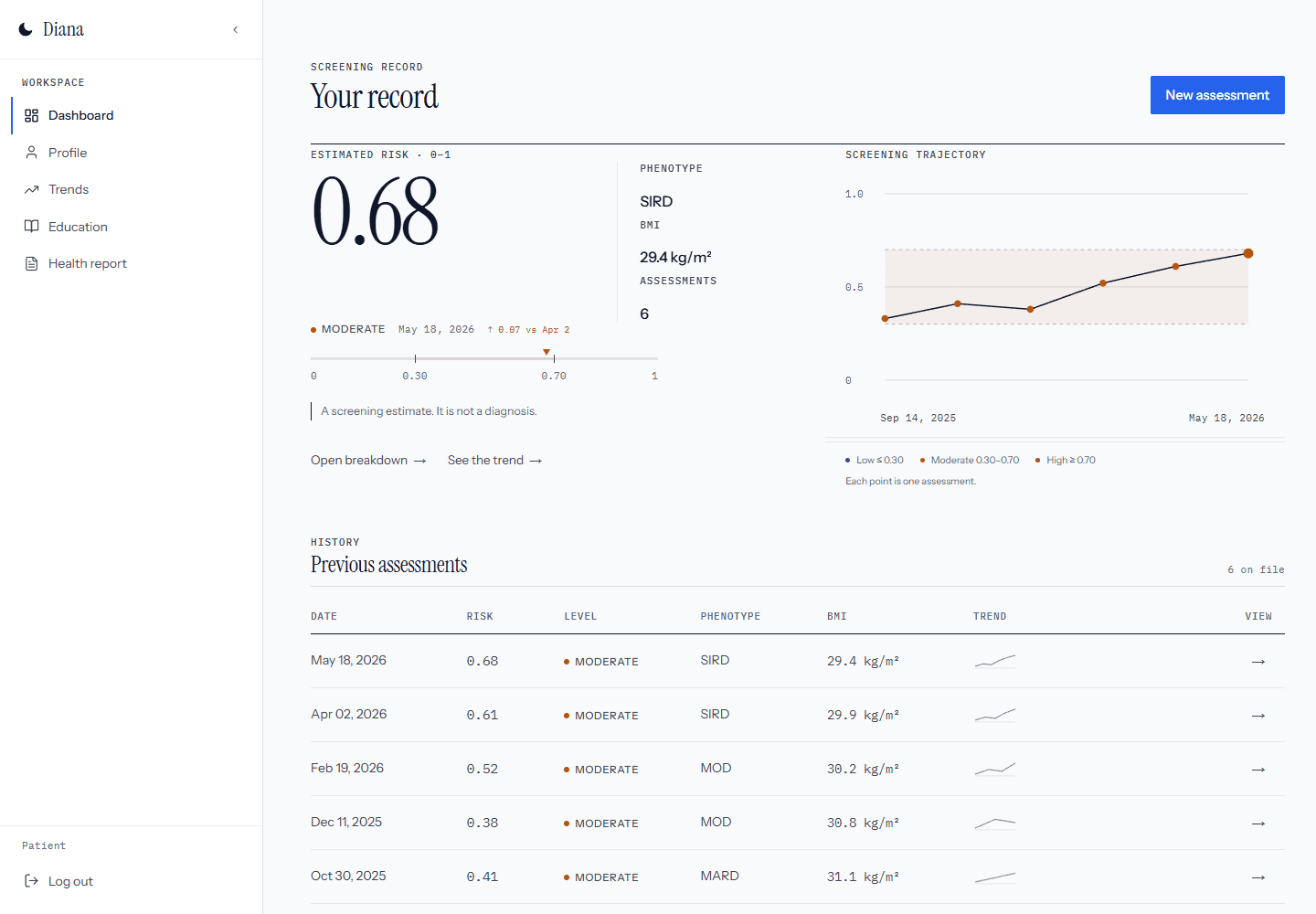
The patient dashboard shows one risk score, how it moved since the last visit, and the full assessment history.
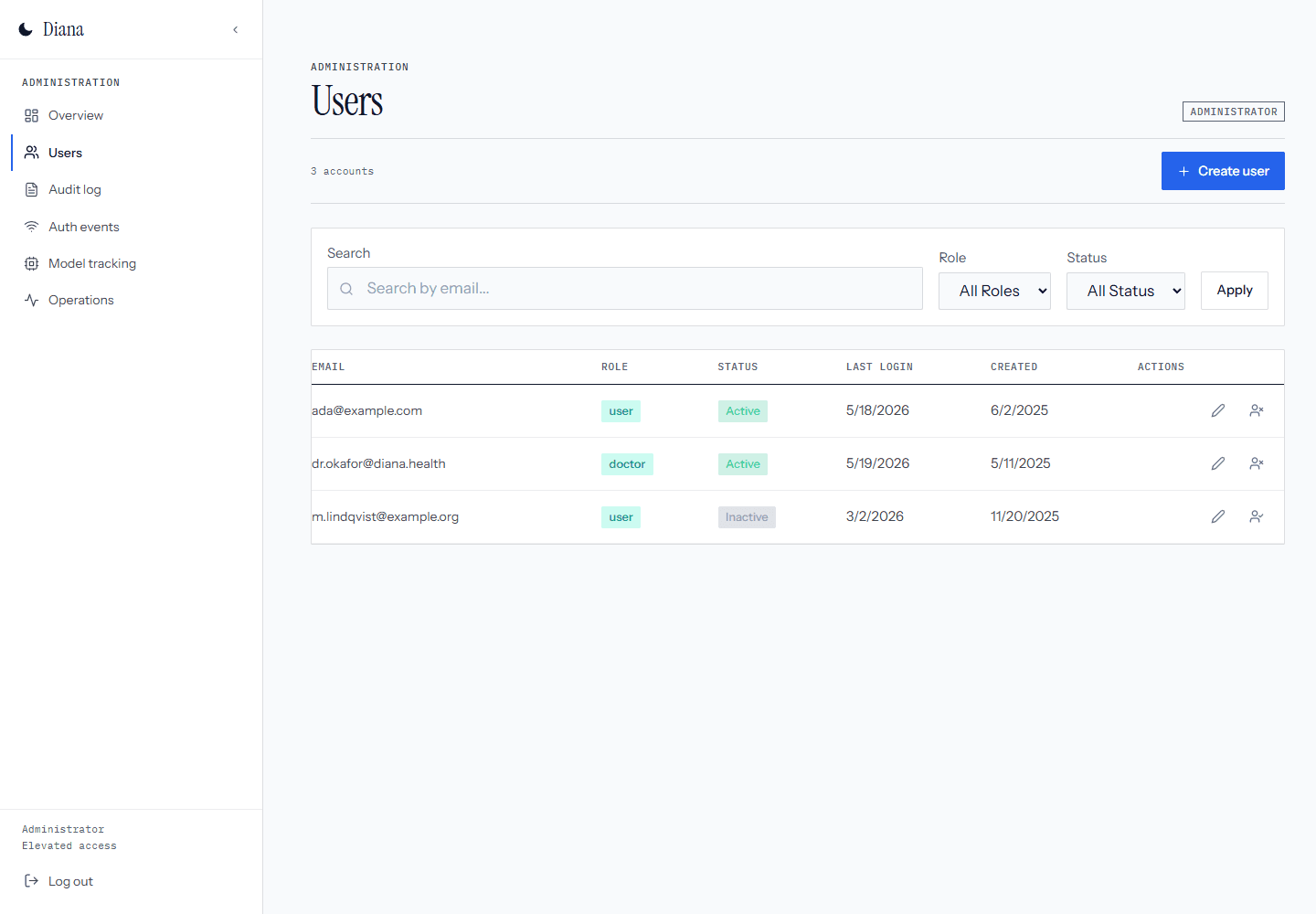
Admins assign roles, flip account status, and see last login for patients, doctors, and other admins.
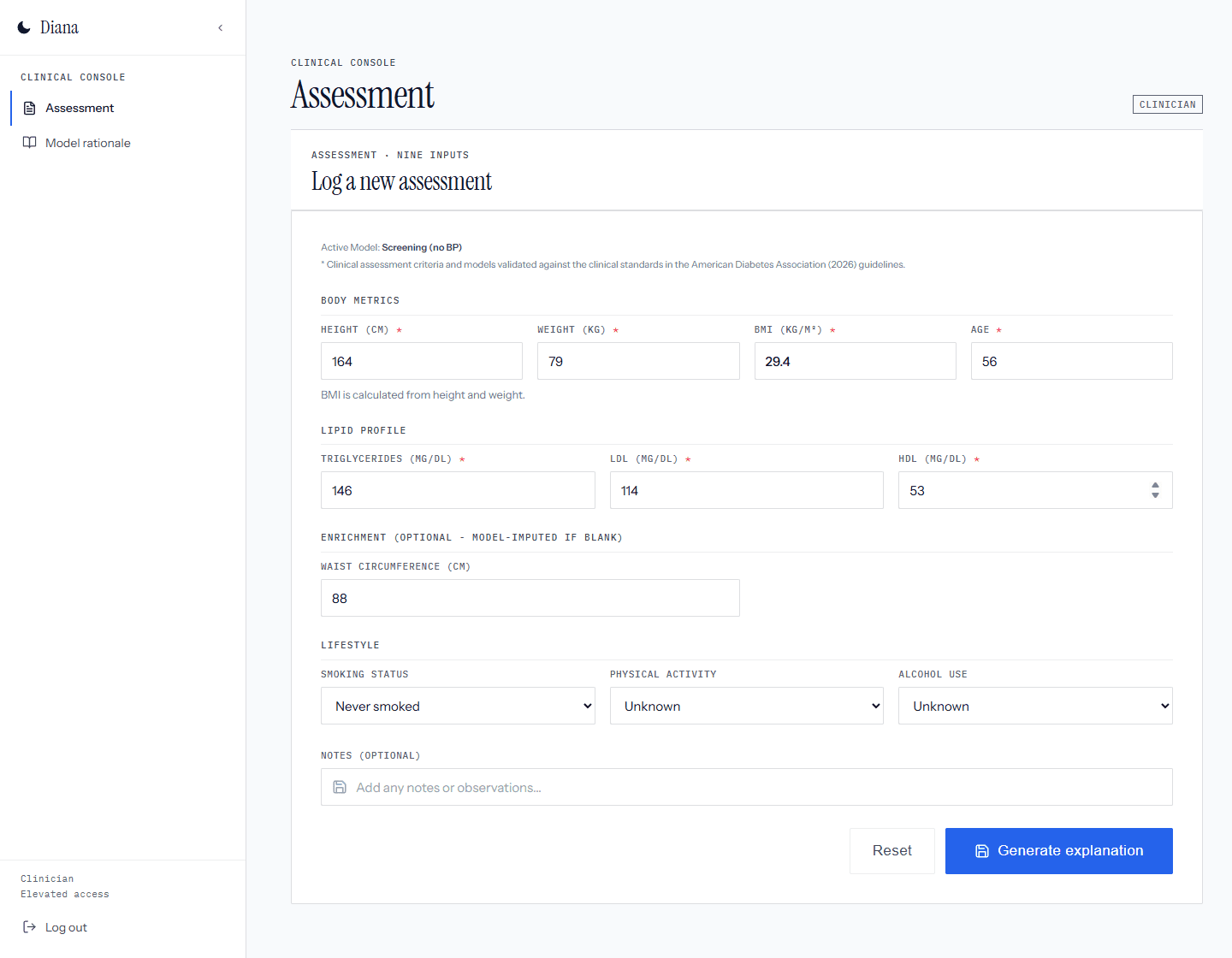
Doctors enter body metrics, lipids, and lifestyle fields on a form tied to the screening model. BMI comes from height and weight; required markers block submit until they validate.
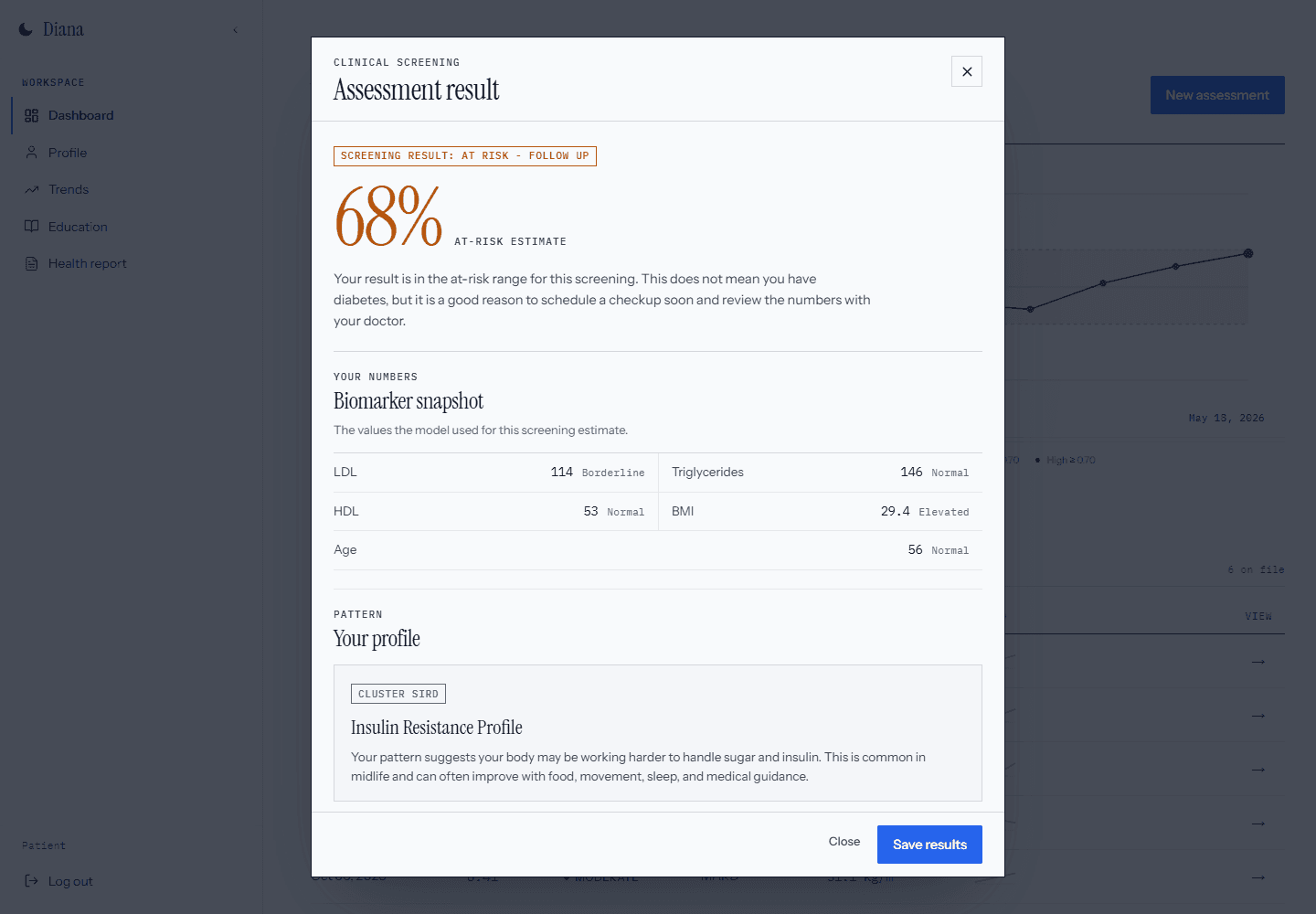
The result modal shows the at-risk percentage, biomarkers, metabolic cluster, and next steps. Copy reads as screening support, not a diagnosis.
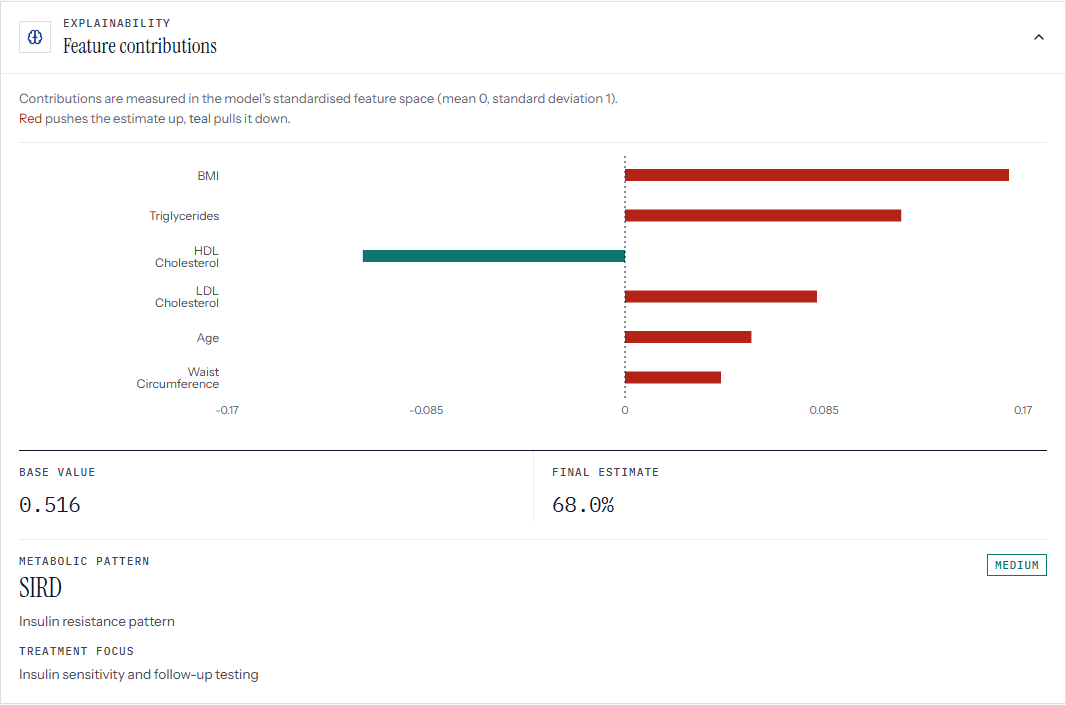
SHAP for one assessment from the no-BP model. BMI, triglycerides, and LDL push the estimate up; HDL pulls it down. HbA1c and fasting glucose are not inputs, so they never appear here.