2025Full-Stack Web App
PayUp
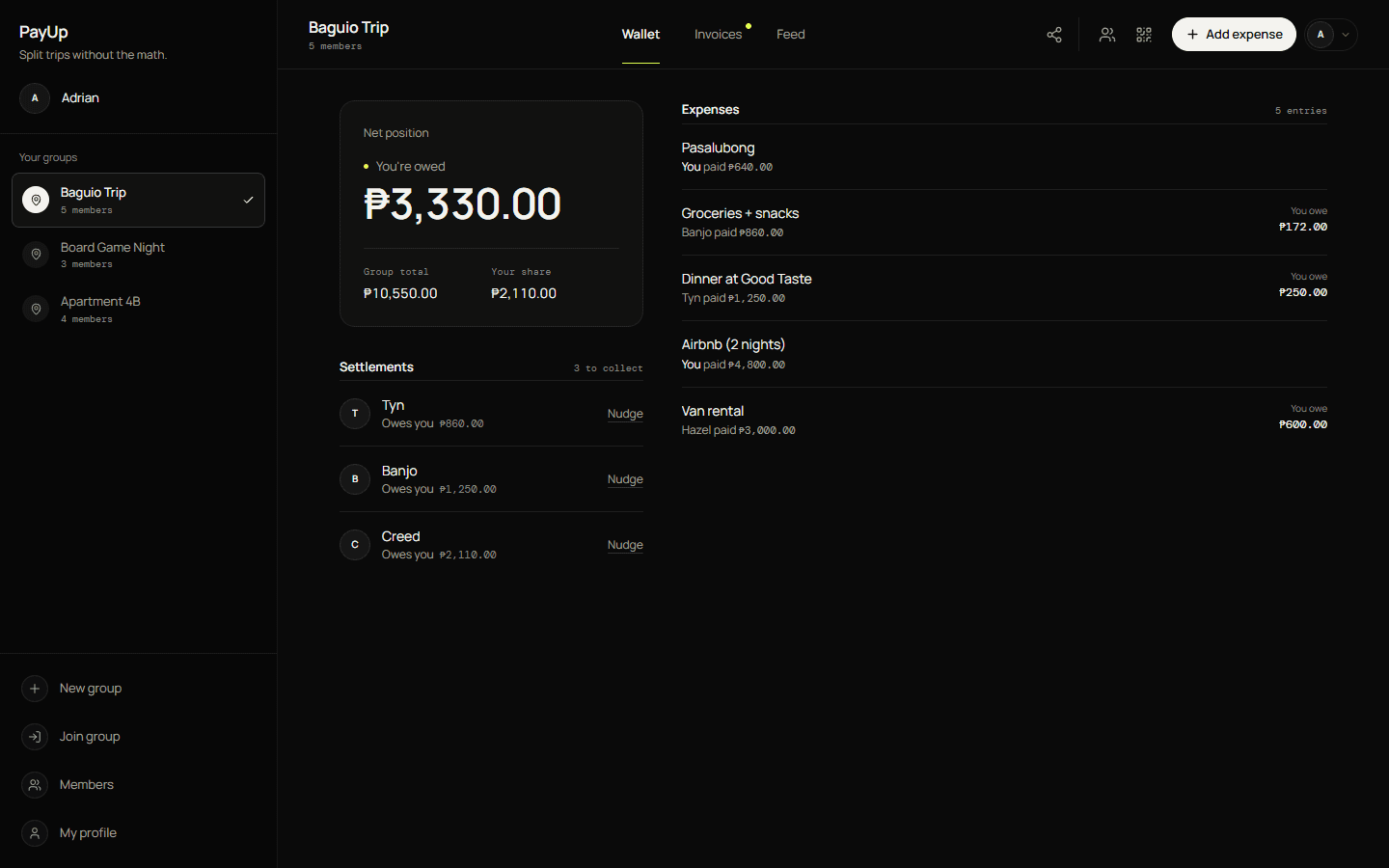
A group expense tracker that calculates one net balance per person, with live tab updates and camera receipt scanning.
One balance replaces messy group debts, and receipt photos turn into itemized bills instantly.
GoGinPostgreSQLsqlcReact 19TypeScriptTailwind CSSNeonDB
My role
- 01Designed a shared ledger that nets each member's balance against the group, recording settlements as transfers to keep history intact.
- 02Synced active balances across open tabs in real time, so any added bill or approved payment updates everyone's phone immediately.
- 03Added receipt scanning using visual OCR to parse items and totals from photos into draft expenses, skipping manual typing.
- 04Built the backend in Go and PostgreSQL with sqlc for compile-checked queries and predictable financial transactions.
- 05Secured accounts with encrypted sessions, password protection, and API rate limits.
- 06Built a responsive mobile interface with fast expense entry and instant screen updates.
Details
The shipped client, running against seeded data. Add an expense and the balances move; approve a settlement and they move back.
Captured from the running client at 360×740.
System topology. The API is the only component holding credentials, which is why OCR and uploads go through it.
The ledger model behind the balance screen, worked through with three members and three expenses.